flâneur /flaˈnəː, French flanœʀ/
noun
a man who saunters around observing society
How can design reframe the way we perceive and navigate our urban environments in an age of constant connectivity and surveillance?
Self-initiated study
Speculative design
Public engagement
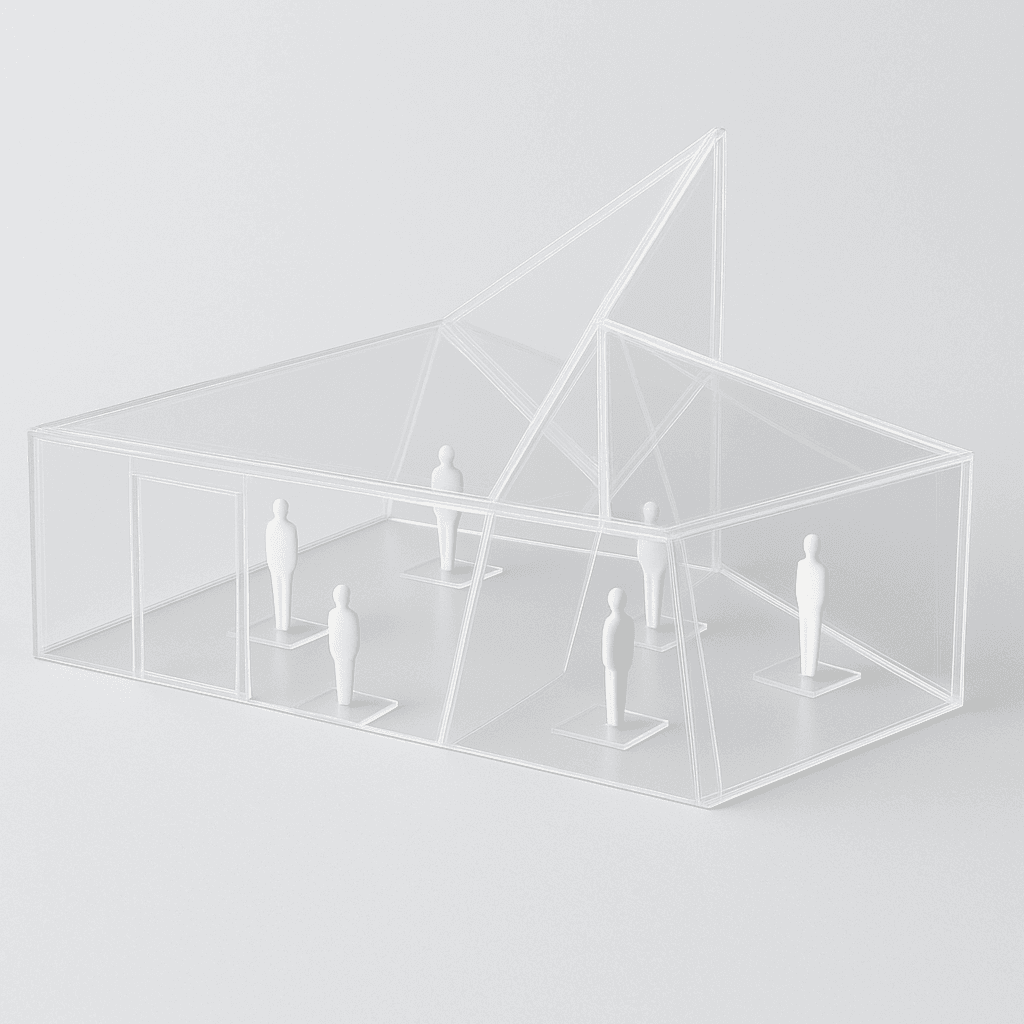
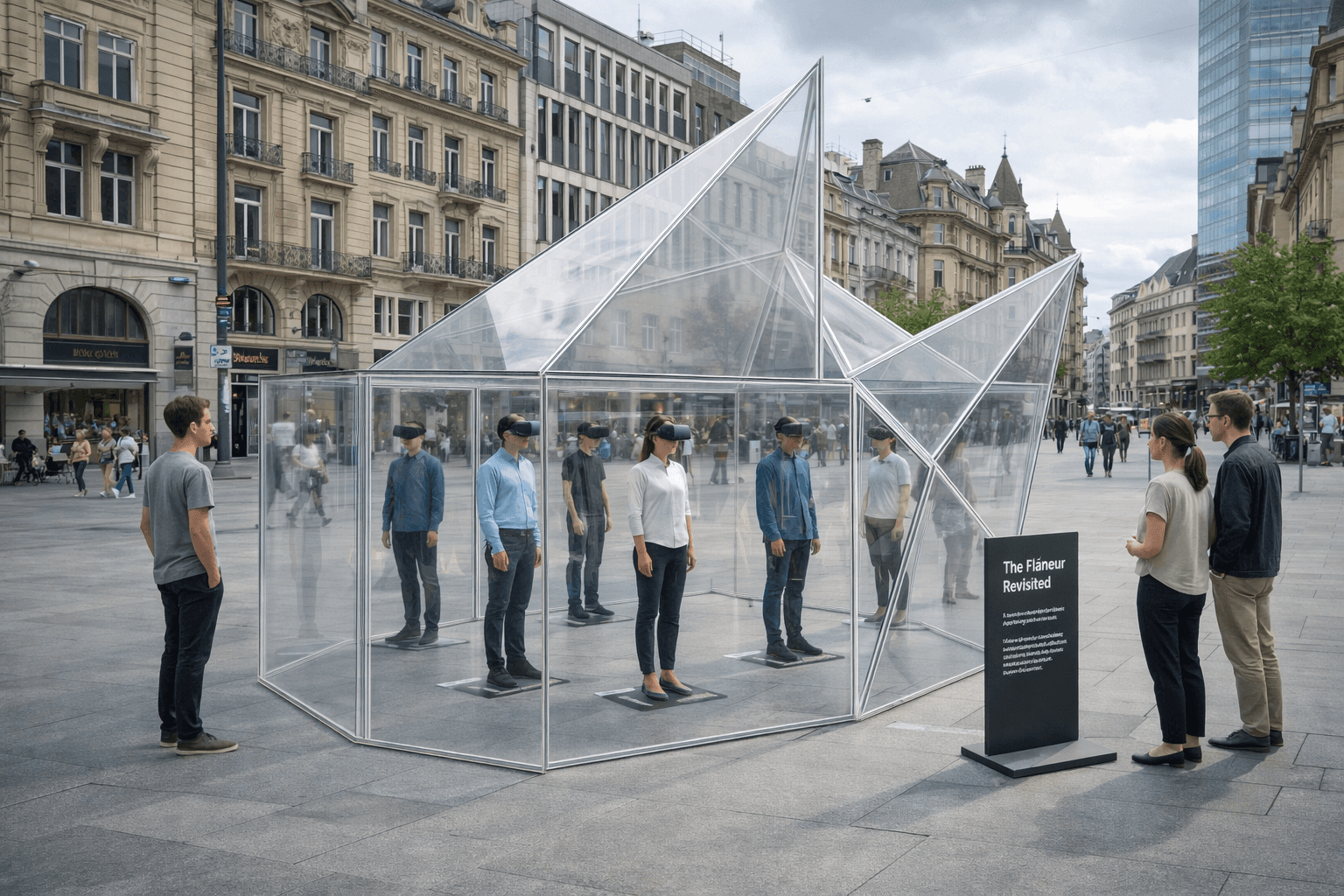
The Flâneur Revisited is a speculative design project situated directly in the city. It takes the form of a transparent laboratory placed in a public square, intersection, or plaza. The structure operates as an urban artefact where observation, participation, and exposure coexist. The city is not the backdrop of the project. It is the material.
Visitors enter a space where past and present overlap, and where the simple act of looking becomes socially and politically charged.
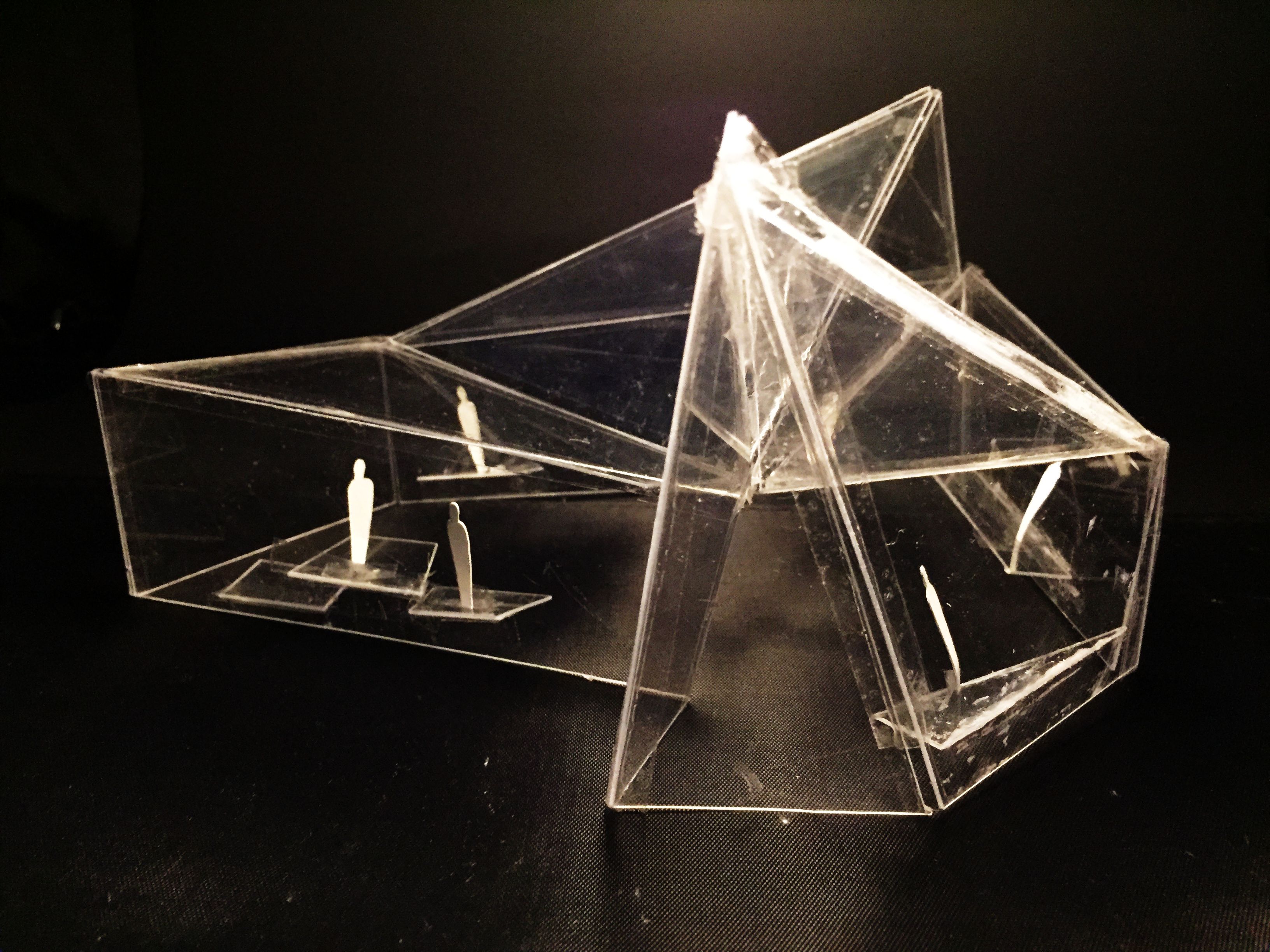
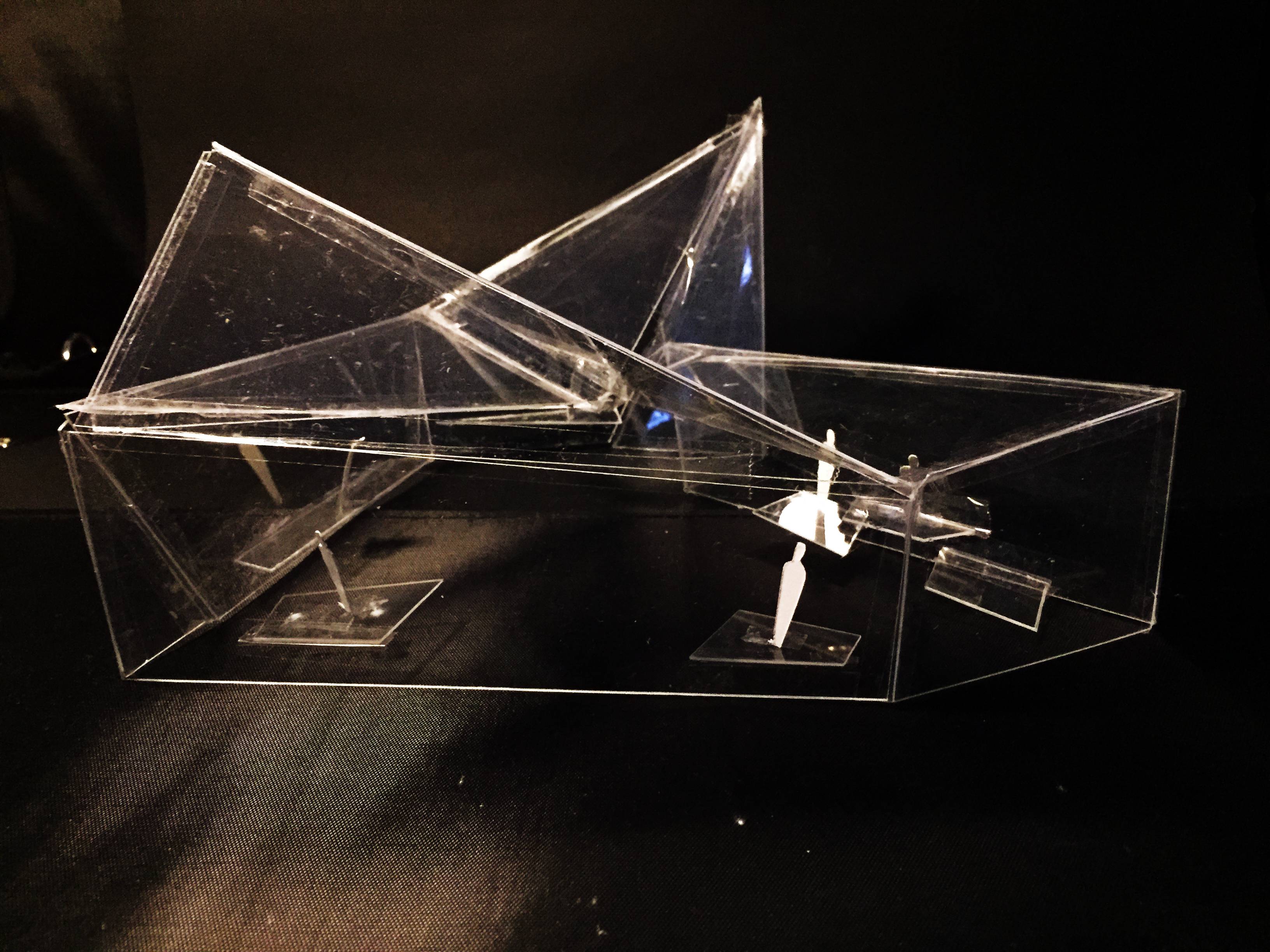
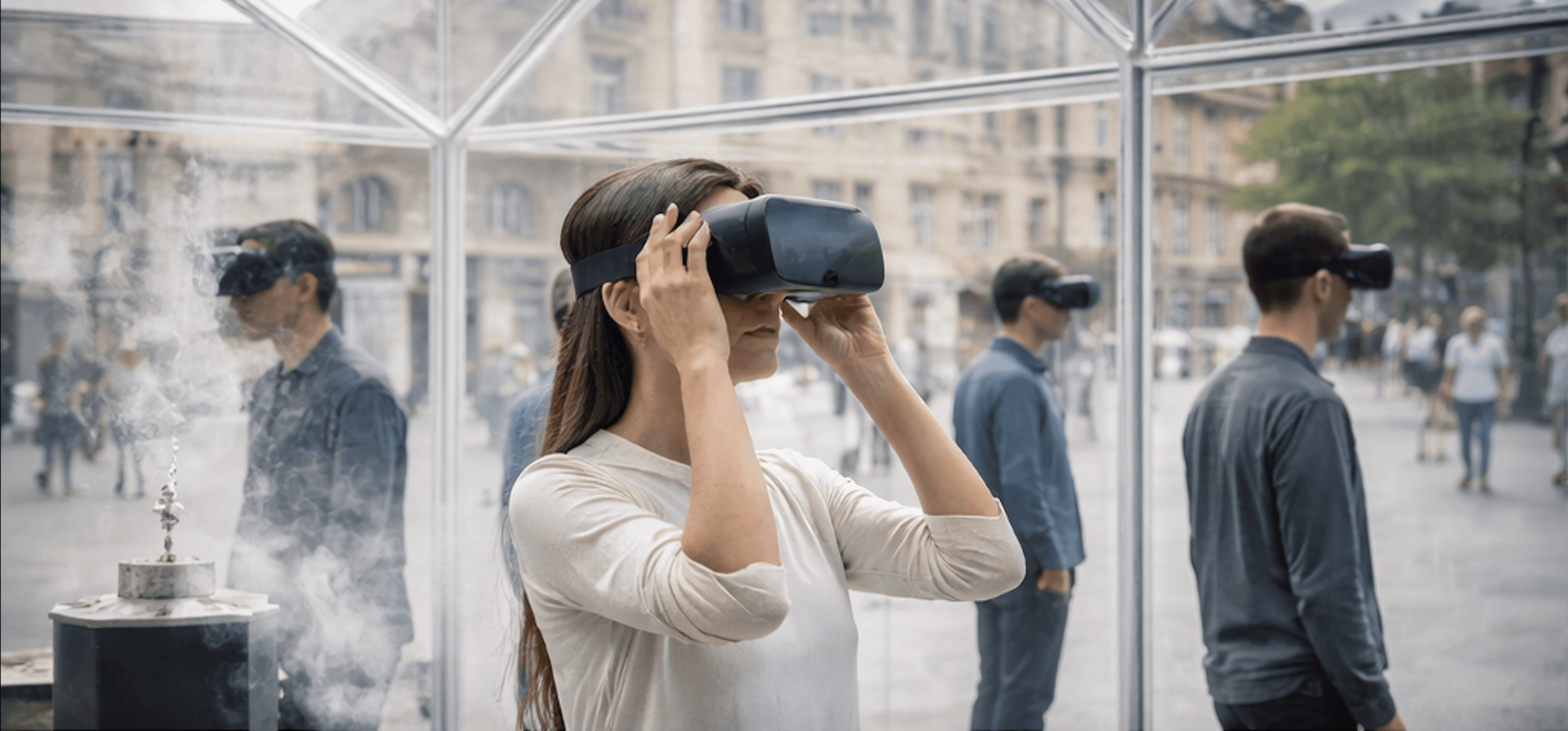
The installation contains VR headsets fixed to precise positions and orientations within the structure. Each headset reveals a historically reconstructed view of the city from the exact point where the visitor stands. Turning the head reveals streets, buildings, and infrastructures as they once appeared, aligned with the contemporary city outside the glass.
Scent is introduced as a parallel layer. Carefully developed olfactory cues evoke materials and atmospheres from earlier periods of urban life. Smoke, stone, damp earth, industry, and vegetation linger in the space, grounding historical imagination in bodily experience.
The structure is fully transparent. Visitors looking into the past are visible to those passing by.

Public Visibility
Layered Time
The glass enclosure shifts the conditions of spectatorship. Engagement with the installation becomes a public act. Watching and being watched happen simultaneously. The figure of the flâneur, once associated with anonymity and detached observation, is repositioned within a culture shaped by surveillance, data capture, and constant visibility.
Experiencing the city through historical perspectives creates moments of temporal tension. Urban transformation becomes tangible through absence, replacement, and accumulation. Familiar streets appear unfamiliar. Infrastructure reveals its age. Decisions made decades earlier remain embedded in everyday movement.
The Flâneur Revisited proposes the city as an active archive that is continuously accessed, edited, and performed. It imagines public space as a site where memory, technology, and power become perceptible through direct experience.
Standing still inside the structure, visitors encounter a city that has been many things at once, and a present that is already being watched, recorded, and shaped.
