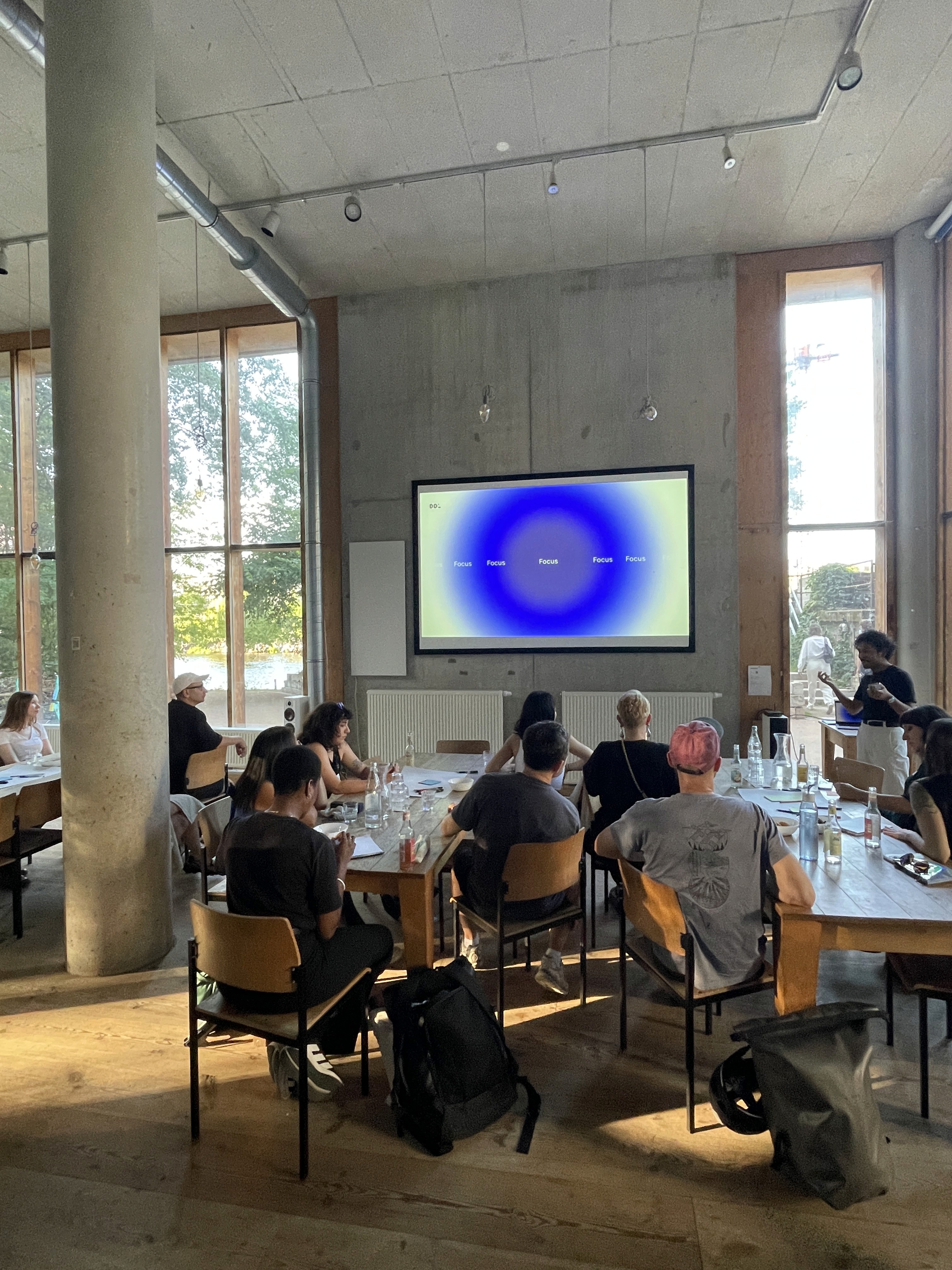
Many organisations work with objects, materials, and concepts that feel neutral and settled. Over time, these things fade into the background of daily practice, even though they quietly shape decisions, responsibilities, and values.
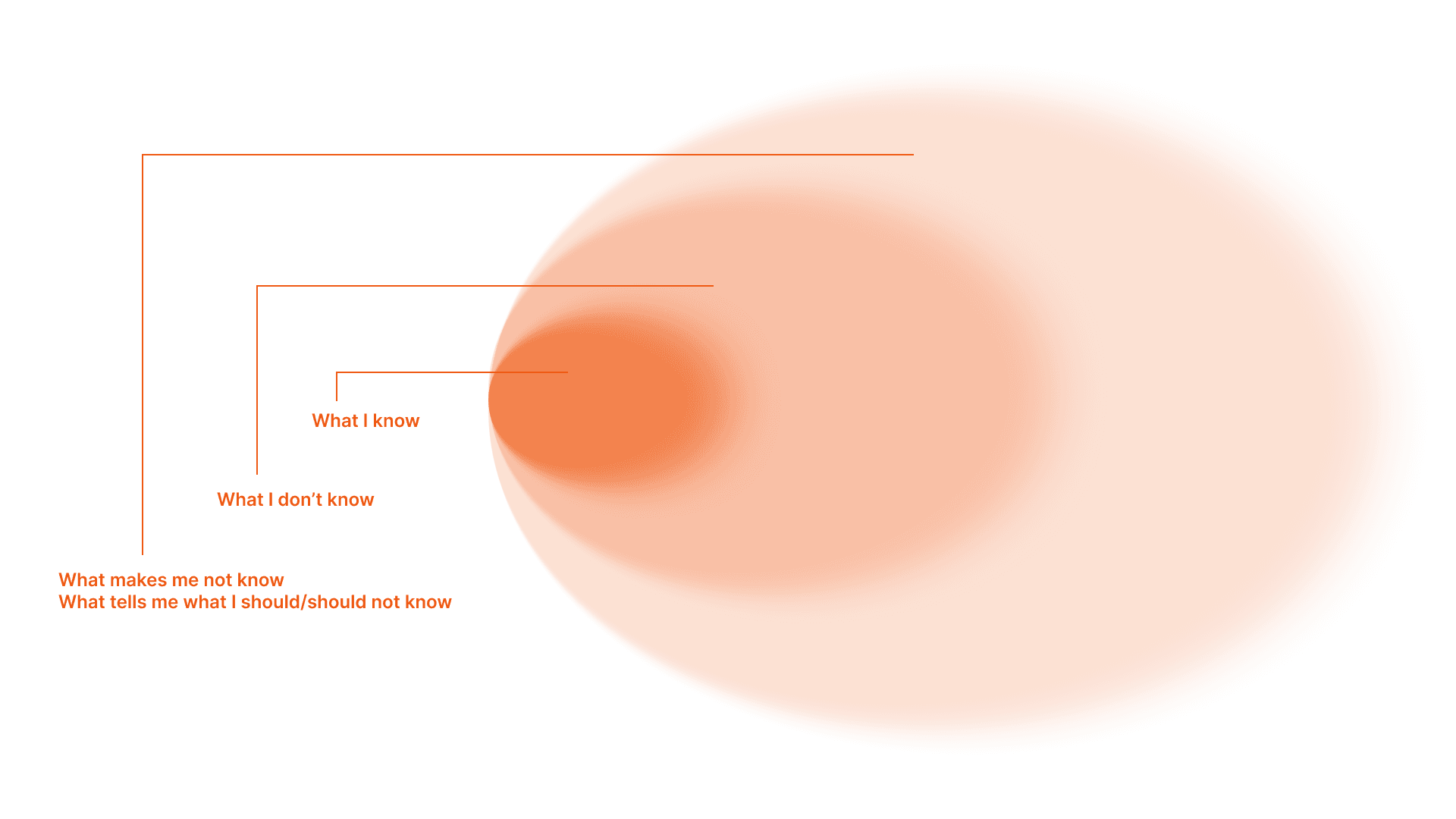
This workshop introduced the Implosion Method, developed by Joseph Dumit, through hands-on, collective examination of ordinary objects. By staying with the mundane, participants learned how much complexity is already folded into the simplest things.
In July 2025, we ran this workshop via our community DesignDesign. Present were participants from design, content, research, and strategic practices.
We started by a short, though-provoking talk on Designing Imagination Practices by Markus Kreutzer. We, then, introduced the participants to the Implosion method and why it mattered.
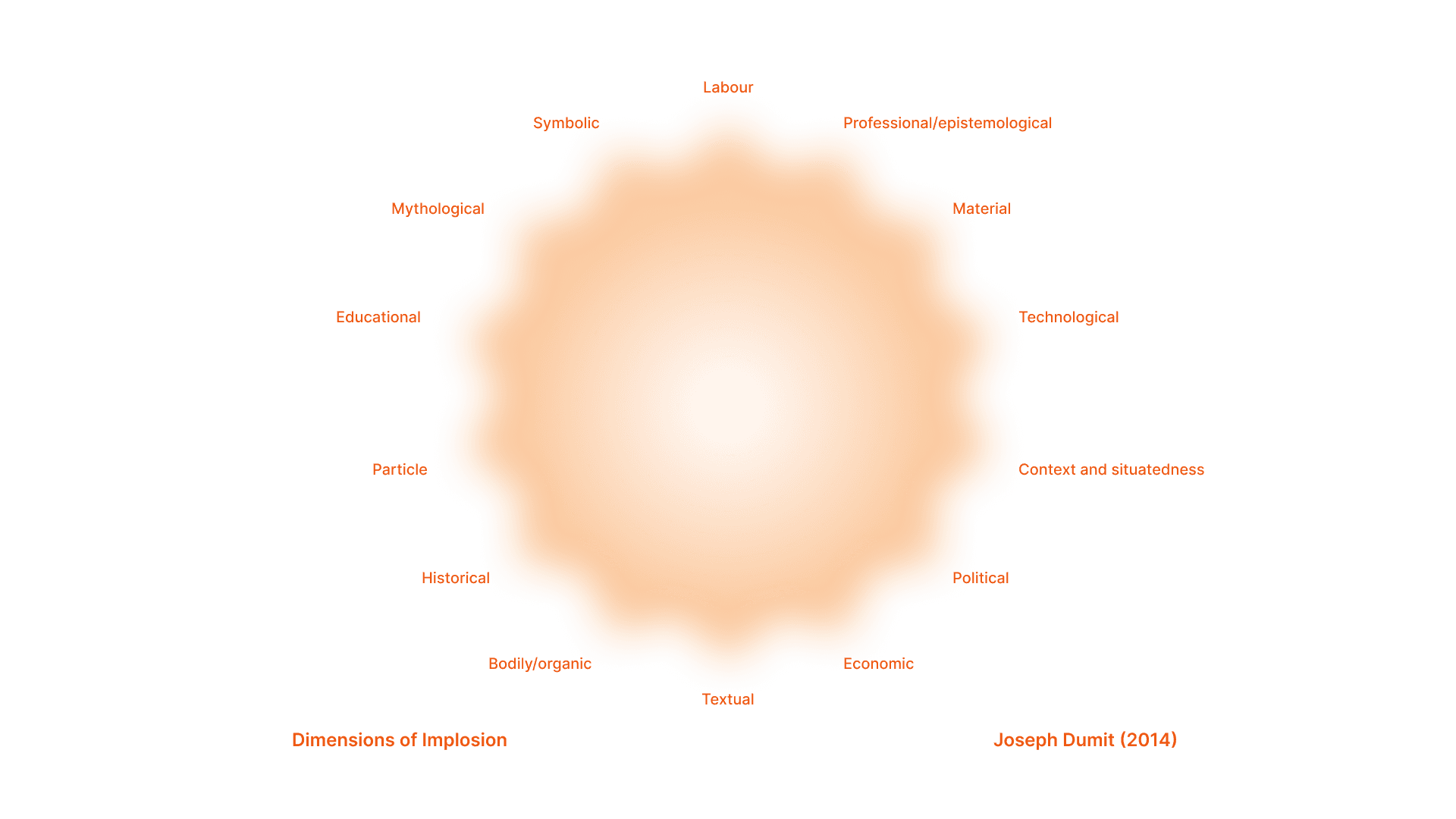
We guided participants through the workshop, imploding on everyday, mundane objects such as lighters and pens. Participants explored the 16 dimensions of these objects. Practical use, regulation, cultural meaning, responsibility, labour, and exclusion were all discussed as part of the objects.
As conversations unfolded, participants connected what they noticed to their own work contexts. The objects became anchors for thinking about larger organisational questions.
Who is this workshop designed for?
Cultural organisations and museums
Cultural organisations work with objects, narratives, and publics at the same time. Applying implosion to exhibition artefacts, labels, collection categories, or even the idea of “the audience” helps reveal how authority, interpretation, and inclusion are already shaped. This can inform how stories are told, whose perspectives are foregrounded, and how institutional roles are performed.
Sustainability consultancies and impact-driven organisations
For teams working on sustainability, implosion can be applied to materials that are assumed to be responsible or ethical. Examining materials such as paper or plastic opens up questions around supply chains, measurement systems, environmental narratives, labour, and responsibility. This helps teams better understand what is being claimed when something is labelled “sustainable,” and what remains outside that framing.
Public sector and service organisations
In public services, implosion can focus on everyday tools such as forms, permits, signatures, or digital interfaces. These objects condense rules, accountability, and judgement. Examining them closely helps clarify how services are actually enacted, where responsibility is placed, and how complexity is managed in practice.
Design, research, and innovation teams
Implosion can be applied to widely used concepts such as “the user.” Treating such concept as objects of examination helps teams reflect on how behaviour, capability, and inclusion are imagined. This often brings attention to blind spots in research practices and assumptions that shape design decisions from the start.
What participants said:
"The workshop was a great opportunity for me to learn about systems design, which I wasn’t very familiar with before. What stayed with me most was how a small, seemingly trivial object could open up so many different perspectives."
Hyeonji
Product Designer at DeepL

