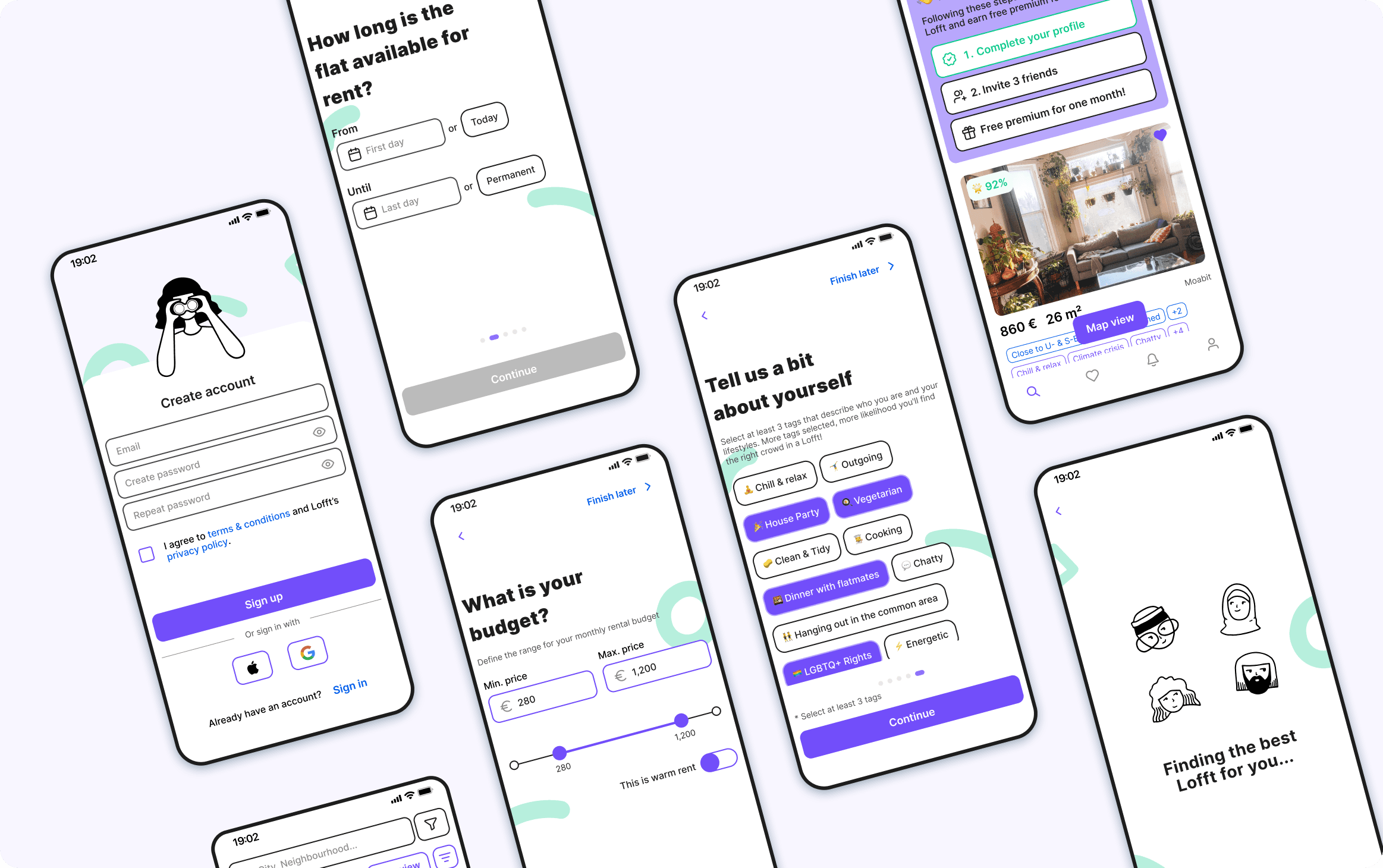
Finding a place to live is never just a practical matter. It’s about belonging, safety, and trust. For foreigners and minorities, securing a flatshare can be particularly challenging, as they often face barriers such as discrimination, opaque processes, and lack of reliable information.
Lofft is a concept for a digital platform designed to make flatsharing safer, more transparent, and more inclusive.
Lofft
UX/UI Design
Design System

" A friend of mine got scammed for a €900 deposit. They took his money and he did not have a place to live. I mean, we are students and we are all taking loan from India and it's not good dealing with financial problems. "
Priya, 26
Flatshare platforms today typically focus on speed and efficiency. They match people as quickly as possible. But this overlooks deeper systemic issues:
Safety and scams: Many tenants reported feeling unsafe, encountering fraudulent listings, or fearing exploitative landlords.
Discrimination and exclusion: Foreigners, minorities, and people with non-traditional backgrounds experienced higher rejection rates when applying.
Integration and loneliness: Newcomers often lacked access to social networks that make flatshare life easier and more supportive.
Opaque processes: Lack of transparency in how flatmates were selected created mistrust and frustration.
The challenge was to design a digital service that not only facilitates flatmate matching but also addresses systemic inequities in how people access shared housing.
Challenge
2x
cost per square meter has doubled over the last few years in Berlin, making shared accommodation a viable option for affordable living.
58%
of young tenants take social impact into consideration when choosing accommodation.
Flatshare platforms today typically focus on speed and efficiency. They match people as quickly as possible. But this overlooks deeper systemic issues:
Safety and scams: Many tenants reported feeling unsafe, encountering fraudulent listings, or fearing exploitative landlords.
Discrimination and exclusion: Foreigners, minorities, and people with non-traditional backgrounds experienced higher rejection rates when applying.
Integration and loneliness: Newcomers often lacked access to social networks that make flatshare life easier and more supportive.
Opaque processes: Lack of transparency in how flatmates were selected created mistrust and frustration.
The challenge was to design a digital service that not only facilitates flatmate matching but also addresses systemic inequities in how people access shared housing.