Identity, Traditions, Futures and Governance
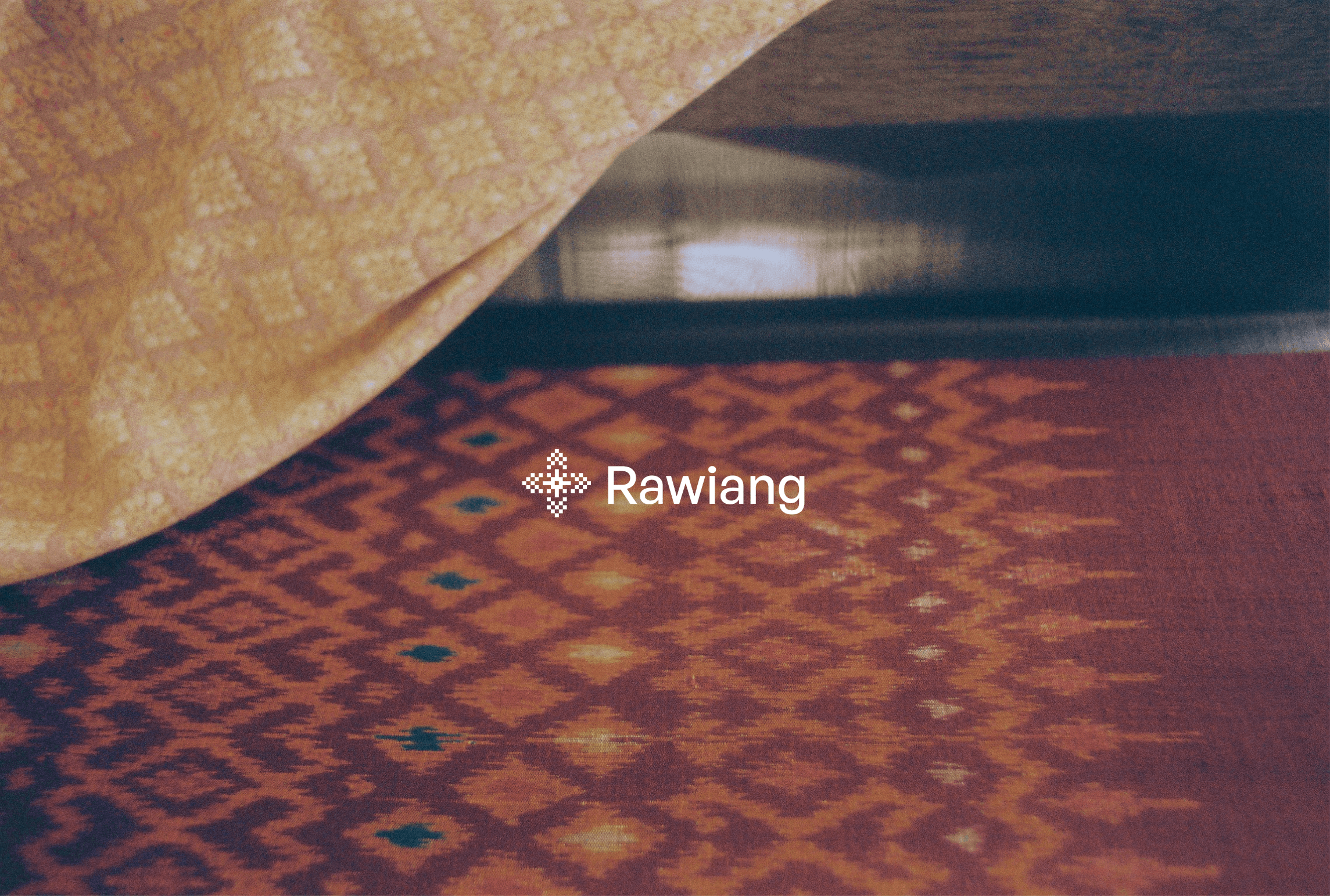
The Ban Rawiang Silk Weaving Group produces handwoven silk using traditional techniques passed down over generations. While the craft itself remained strong, the group lacked a distinct pattern that clearly represented their village. Existing designs relied on motifs adapted and duplicated across the region, making it difficult to differentiate their work, articulate identity, or protect it from imitation.
The challenge was to develop a pattern that could function as a shared cultural identifier while remaining compatible with traditional weaving methods and meaningful across generations.
Surin Provincial Government & Rawiang Silk Weaving Group
Surin, Thailand
Futures
Ethnography
Participatory Design
Ethnographic Research
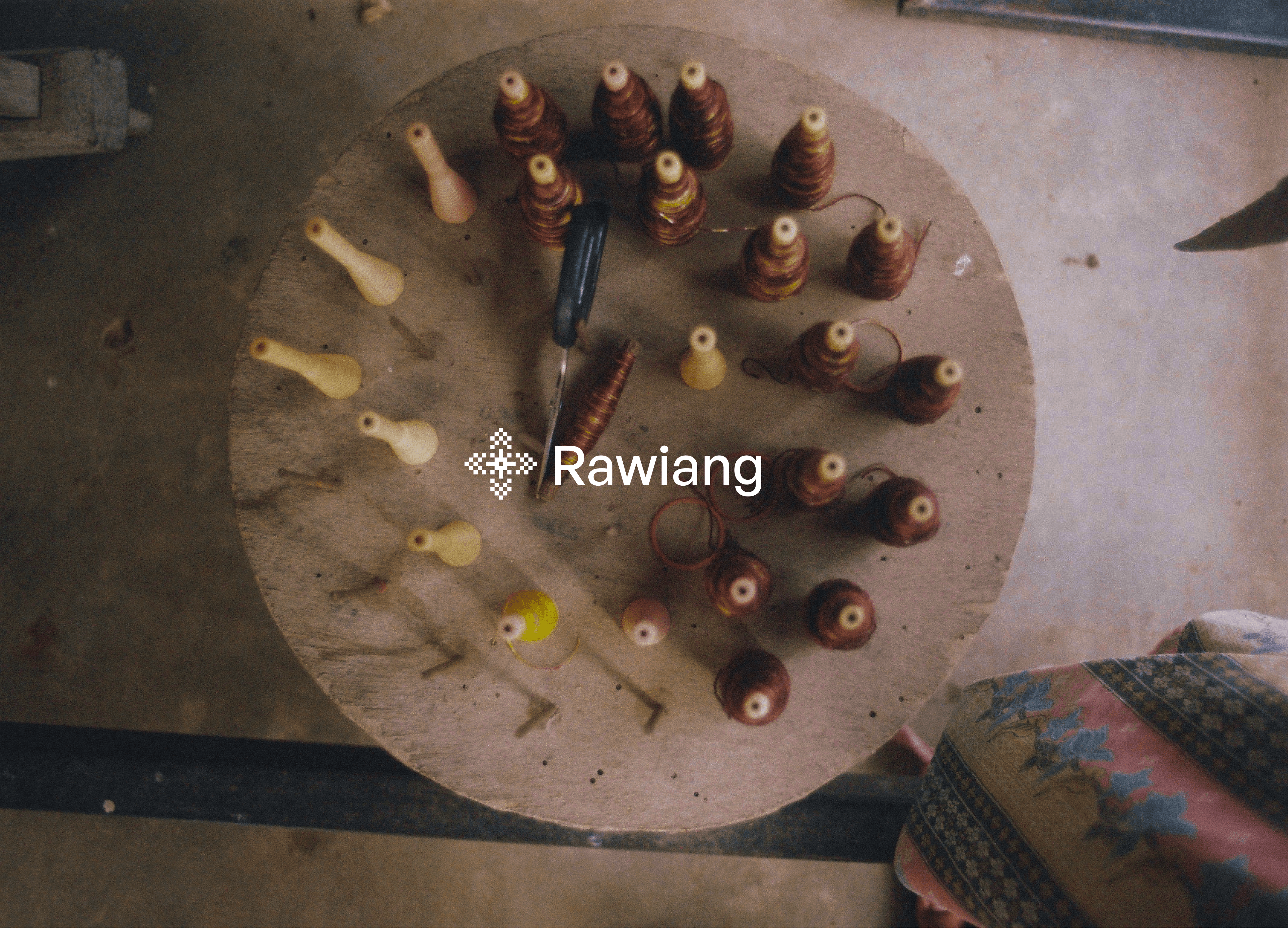
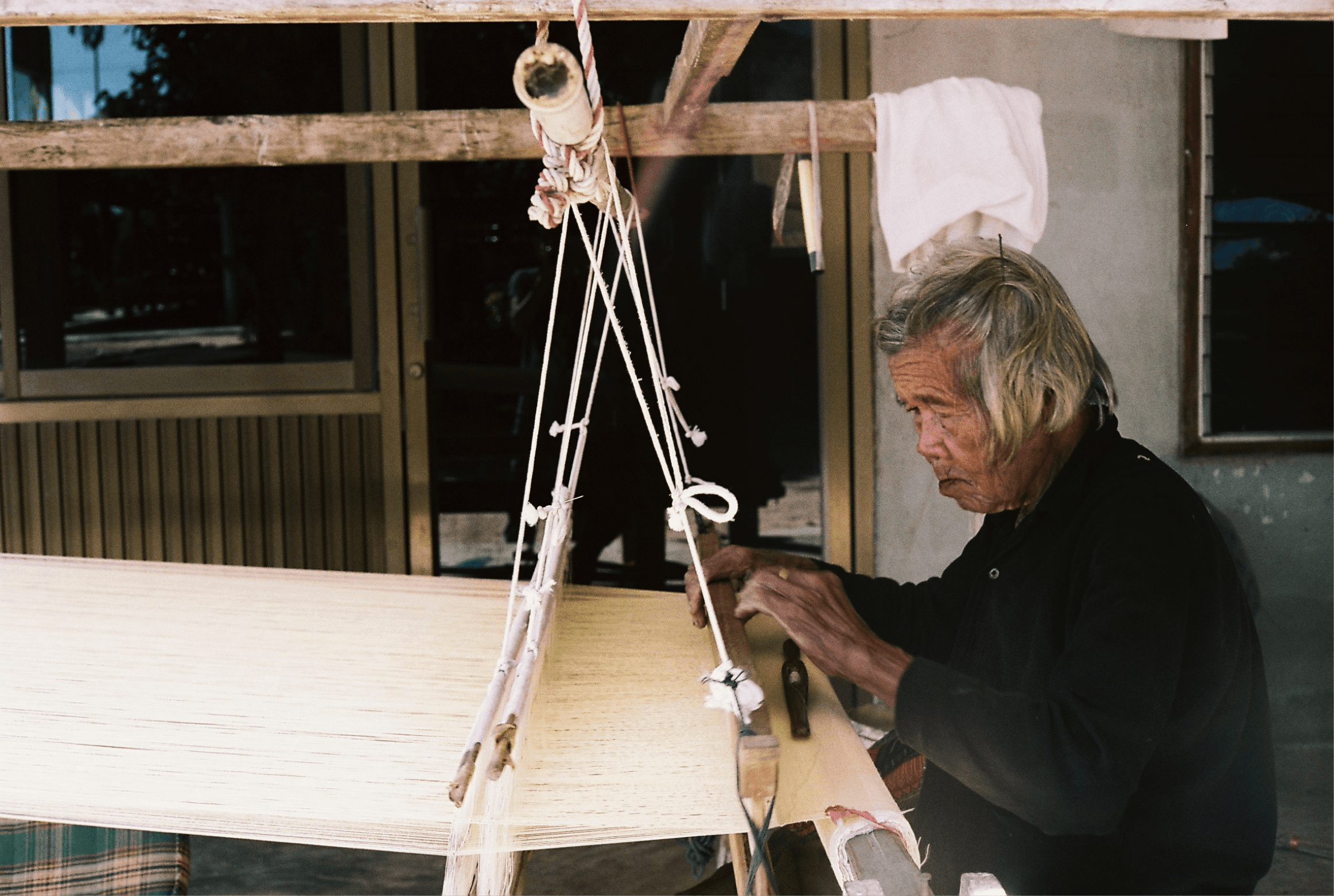
We conducted field-based ethnography through conversations and observation, following the full silk-making process: silkworm cultivation, thread extraction, dyeing, mudmee pattern tying, hand weaving, and post-production circulation.
This revealed how knowledge, meaning, and value are sustained through repetition, shared routines, and intergenerational transmission.
Systems Mapping
We mapped the wider silk ecosystem to understand where materials come from, who contributes labour, how patterns circulate, who purchases the silk, and how cultural and economic value moves beyond the village.
The map highlighted gaps in authorship, recognition, and long-term governance with the pattern being a strategic intervention.
Community Interviews & Identity Mapping
Through interviews with weaving leaders and senior members, we explored what the community considers meaningful, distinctive, and worth carrying forward. Key themes emerged around local ecology, music, technique, and economic sustainability.
The process surfaced differing views on future identity, allowing the design to hold multiple interpretations rather than forcing consensus.

Co-Design & Pattern Development
Using the traditional 25-row weaving grid as the base, we co-designed a pattern with the weaving group. The final design integrates an eight-petal floral motif derived from the Rawiang flower and rhythmic geometric elements inspired by local drum patterns.
Design decisions were tested against technical feasibility, symbolic meaning, and long-term legibility.
Intellectual Property & Governance Strategy
The pattern was registered as applied art (ศิลปะประยุกต์) under Thai copyright law. A perpetual, royalty-free licence was granted to the Ban Rawiang Silk Weaving Group, ensuring exclusive community use while preventing external misuse.
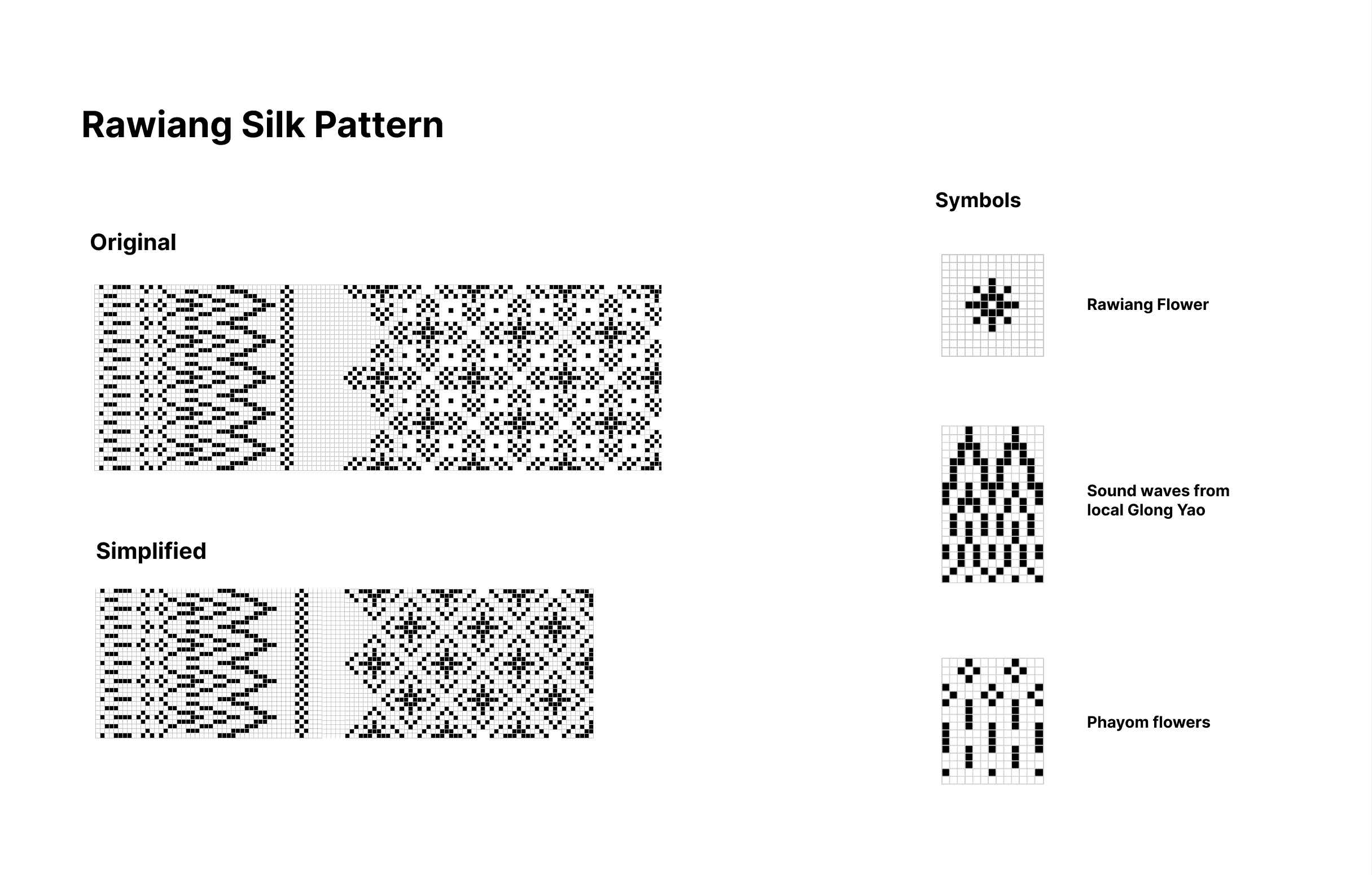
A distinctive silk pattern recognised by the community as representing Ban Rawiang
Shared clarity on village identity and long-term cultural positioning
Increased confidence in presenting the silk to external markets and institutions
Future Readiness · Cultural Sustainability · Economic Differentiation
The project strengthened the weaving group’s ability to make decisions about production, collaboration, and representation. Through the process of reflection and co-design, the pattern became the community's a long-term cultural asset, supporting both economic resilience and intergenerational continuity.
Beyond the artefact itself, the project demonstrates how futures-informed design, ethnography, and systems thinking can support communities in shaping their own long-term trajectories.
